
England’s New Long‑Distance Challenge
Walking the Roof of England Walk is quickly becoming one of the most talked‑about walking experiences on this side of the Pennines,and for good reason.
Launched in late 2025, this 301 km (188 mile) circular route around the North Pennines National Landscape and UNESCO Global Geopark isn’t just another long‑distance trail; it’s a walk that stitches together dramatic terrain, rich heritage and real sense of place in a way few other paths do.
Whether you’re planning a full traverse or picking out a few standout legs, this is a route that rewards curiosity, endurance and an appetite for genuine discovery.
What Is the Roof of England Walk?
At its heart, the Roof of England Walk is a multi‑day, circular network of public rights of way designed to showcase the breadth of the North Pennines. It weaves through the three counties of Cumbria, County Durham and Northumberland, with a short dip into the Yorkshire Dales National Park to take in the iconic Nine Standards Rigg.
The route is typically broken into 14 legs, each ranging from around 8 to 30 km, making it possible to walk as a continuous expedition of 10–14 days, or in shorter chunks of 3–4 day breaks. Each leg links villages or towns, opening up flexible planning and the chance to mix walking days with rest days, local pubs, transport links and overnight stays.
What Makes the Roof of England Walk Special
Walking this route isn’t about ticking off the biggest peaks; it’s about the cumulative richness of the experience:
- A complete circular route – often walked anticlockwise starting and finishing at Appleby-in-Westmorland, the walk crosses three counties (Cumbria, Northumberland and County Durham) with a short detour into the Yorkshire Dales National Park to include the iconic Nine Standards Rigg.
- Dramatic waterfalls and deep valleys – the Teesdale section brings you to Low Force and High Force, among England’s most impressive waterfalls.
- Historic and industrial heritage – from lead mining remnants at Dukesfield Arches to the medieval lanes around Blanchland.
- High cup and high points – including High Cup Nick’s dramatic glacial valley and Cross Fell which is the highest point of the Pennines.
Whether you’re drawn by uninterrupted countryside, varied town links, or standout natural highlights, this is a walk that rewards attention to detail.
Route highlights include:
- Historic Appleby‑in‑Westmorland: Traditionally the official start and finish point, this market town anchors the loop and offers solid transport connections for walkers.
- Cumbrian Highlights: Sections such as the route from Tan Hill Inn to Kirkby Stephen carry you close to the striking Nine Standards and the broad panorama of the Eden Valley.
- Durham Dales Waterfalls: Between Saur Hill Bridge and Middleton‑in‑Teesdale your feet take you past Low Force, High Force and Cauldron Snout – dramatic river encounters that reward every step.
- Industrial and Woodland Heritage: Through Northumberland you’ll pass historic lead mining sites like Dukesfield Arches and tranquil wooded valleys such as Allen Banks.


Planning Your Roof of England Walk
There’s no requirement to complete the entire loop in one go. Many walkers now approach the Roof of England Walk as a series of shorter adventures:
- Three to four‑day mini breaks: Ideal for walkers based in or around the north‑west, these allow you to jump into a string of legs that suit your pace and interests.
- One‑day highlights: Individual sections – such as High Force and the Nine Standards – make excellent stand‑alone walks if you’re short on time or focusing on key “must‑see” experiences.
Public transport links at towns like Appleby‑in‑Westmorland, Haltwhistle and Kirkby Stephen also make it feasible to walk linear stretches without a car. This is a big plus for overseas visitors or anyone looking for flexible logistics.
Suggested Itineraries
Here are a few practical ways to plan your Roof of England Walk – all of which can tie into stays in and around Kirkby Stephen and our base at Augill Castle:
1. Classic 10–14 Day Loop
Ideal if you have the time to take on the full route:
- Day 1: Appleby → Dufton (~19 km)
- Days 2–6: Continue through Alston, Haltwhistle, Allendale and on to Wear Valley
- Day 7: Saur Hill Bridge → Middleton (~13 km) (waterfalls highlight)
- Days 8–10: Middle and Upper stretches via Tan Hill to Kirkby Stephen
- Days 11–12: Kirkby Stephen → Appleby (~25 km) and loop complete
This takes you end‑to‑end with balanced daily distances and plenty of time for detours, culture and rest.
2. Northern Highlights (3–4 Days)
Perfect as a stand‑alone break or a build‑up to longer routes:
- Day 1: Haltwhistle → Allendale (~23 km)
- Day 2: Allendale → Blanchland (~24 km)
- Day 3: Blanchland → Edmundbyers (~8 km) with an optional longer detour
- Day 4: Edmundbyers → Wolsingham (~23 km)
This shorter loop gives exposure to riverside trails, woodland gorge walking and village stops without taking on the full distance.
3. Cumbrian Ridge to Eden (3–4 Days)
For walkers based near the Eden Valley or staying at Augill Castle:
- Day 1: Kirkby Stephen → Appleby (~25 km)
- Day 2: Appleby → Dufton (~19 km)
- Day 3: Dufton → Alston (~31 km)
- Day 4: Alston → Haltwhistle (~24 km)
This gives you a northward taste of the walk’s higher terrain and historic paths before returning south – ideal if you want a mini expedition without the full loop.
Where Augill Castle Fits In
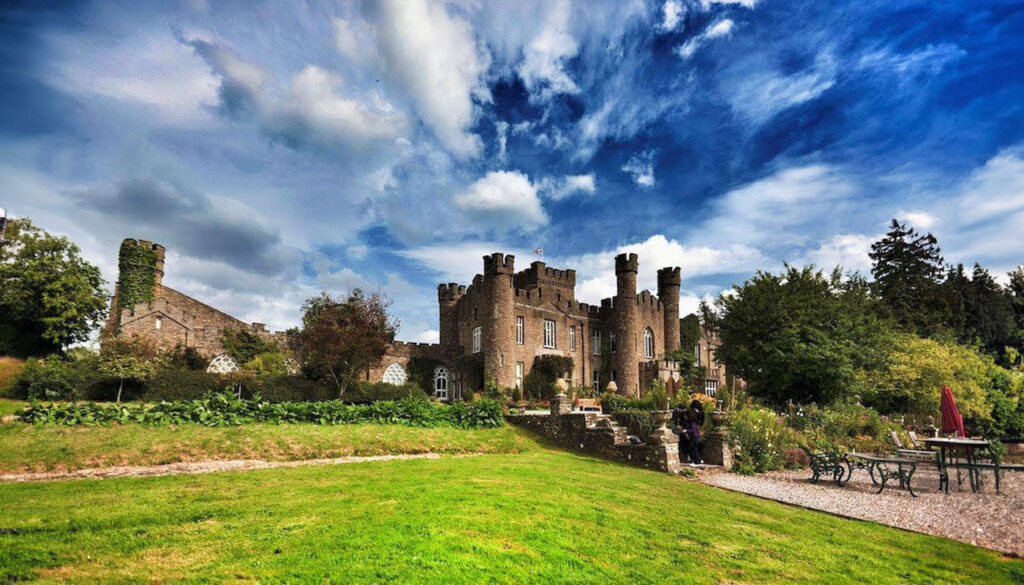
For walkers approaching from the west, Augill Castle makes an ideal base both before and after tackling sections of the Roof of England Walk that bring you into or out of the Eden Valley. Its location just outside of Kirkby Stephen means you’re well placed to rest up after the stretch from Tan Hill Inn or to set off refreshed towards the next leg north. Comfortable rooms, hearty breakfasts and thoughtful walker services (from packed lunches to boot care) mean you can plan your walk with confidence and comfort in equal measure.
Augill Castle isn’t just a place to sleep —-it’s part of the Roof of England Walk experience. Whether you’re tackling the full loop, a northern highlights mini-break, or the Cumbrian ridge and Eden stretch, we provide:
- Comfortable, spacious rooms for drying and relaxing after long days
- Hearty breakfasts timed for early departures
- Packed lunches and picnic hampers for days on the trail
- Boot and laundry services so you can travel light
- Flexible check-in/check-out to match walking schedules
You can rest, refuel, and plan your next leg without compromise, bringing a bit of luxury and calm to a long-distance adventure.
Why The Roof of England Walk Matters
Walking the Roof of England Walk isn’t just about adding another long‑distance route to your list but it’s about exploring a newly defined experience in a landscape that has always deserved attention. The varied terrain, historic anchor points and flexible planning options make it a genuine contender on the world walking stage, whether you’re an experienced long‑distance walker or someone stepping up to their first multi‑day journey
For walkers ready to embrace something new with challenge, variety and the unexpected around every corner. This is one adventure that’s already starting to feel like a must‑do on the UK’s long‑distance portfolio.
Augill Castle is a 19th Century home-from-home boutique hotel on the outskirts of Kirkby Stephen who have been hosting walkers and visitors to Cumbria and The Lake District (a short drive!) for 30 years.
This is the link to BOOK Augill Castle, or if you fancy a human at the end of a phone jump on +44 17683 41937. We can also be found hanging on the email at [email protected]